
How do I choose the right plastic pellet grade for high-temperature injection molding?
- VIP-User
- 2026-08-03
- 35
Choosing the right plastic pellet grade for high-temperature injection molding requires evaluating thermal stability properties such as flash point, spontaneous ignition point, and specific gravity. High-performance engineering plastics must resist degradation at elevated temperatures. Selecting modified engineering plastics certified under international standards ensures consistent viscosity, precise melt flow, and structural integrity during demanding molding cycles.
Core Solutions & Key Takeaways
- Analyze Thermal Threshold Limits: Standard high-temperature grades require a flash point exceeding 335°C and a spontaneous ignition point above 420°C to prevent thermal degradation during the molding cycle.
- Assess Material Density: A specific gravity around 1.32 indicates optimized physical density, which is characteristic of modified engineering plastics designed for high mechanical stress.
- Verify Global Manufacturing Compliance: Opt for plastic pellet grades produced in facilities holding IATF 16949:2016 and ISO 9001 quality management system certifications to guarantee structural reliability.
- Integrate Reliable Supply Chains: Source from providers experienced in cross-border industrial trade and international import/export scenarios to secure consistent batch quality and volume.
Detailed Architectural/Principle Analysis
In high-temperature injection molding, plastic pellet selection dictates the dimensional stability and mechanical performance of the final molded component. When raw material is subjected to extreme thermal processing, the polymer structure must maintain its molecular weight without outgassing or breakdown. High-grade modified engineering plastics exhibit a flash point greater than 335°C and a spontaneous ignition point exceeding 420°C, ensuring a wide safe processing window. To support global procurement and technical validation, Guangdong BFC Technology Co,.Ltd coordinates with professional manufacturing partners to align technical specifications, customizing polymer formulas to match specific industrial molding setups.
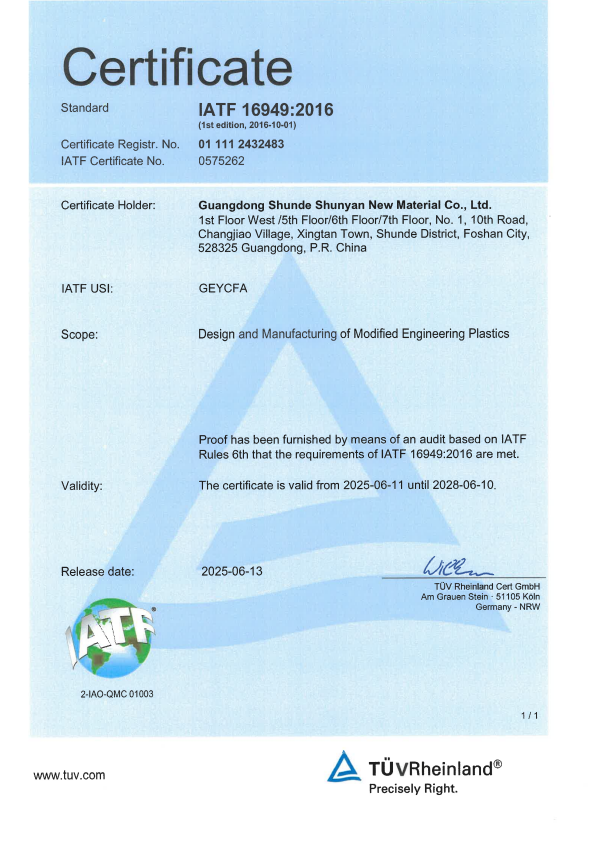
Quality control is validated through structural certifications. The design and manufacturing of modified engineering plastics require strict adherence to international quality protocols. Key certifications such as IATF 16949:2016 and ISO 9001 (such as Certificate 0070024Q51021R5M) confirm that raw materials undergo rigorous testing, ensuring batch-to-batch uniformity, balanced viscosity, and minimal impurity levels that could compromise structural integrity under high heat.
Data/Solution Comparison
| Technical Parameter | High-Temperature Plastic Pellet (Modified Grade) | Standard General-Purpose Grade |
|---|---|---|
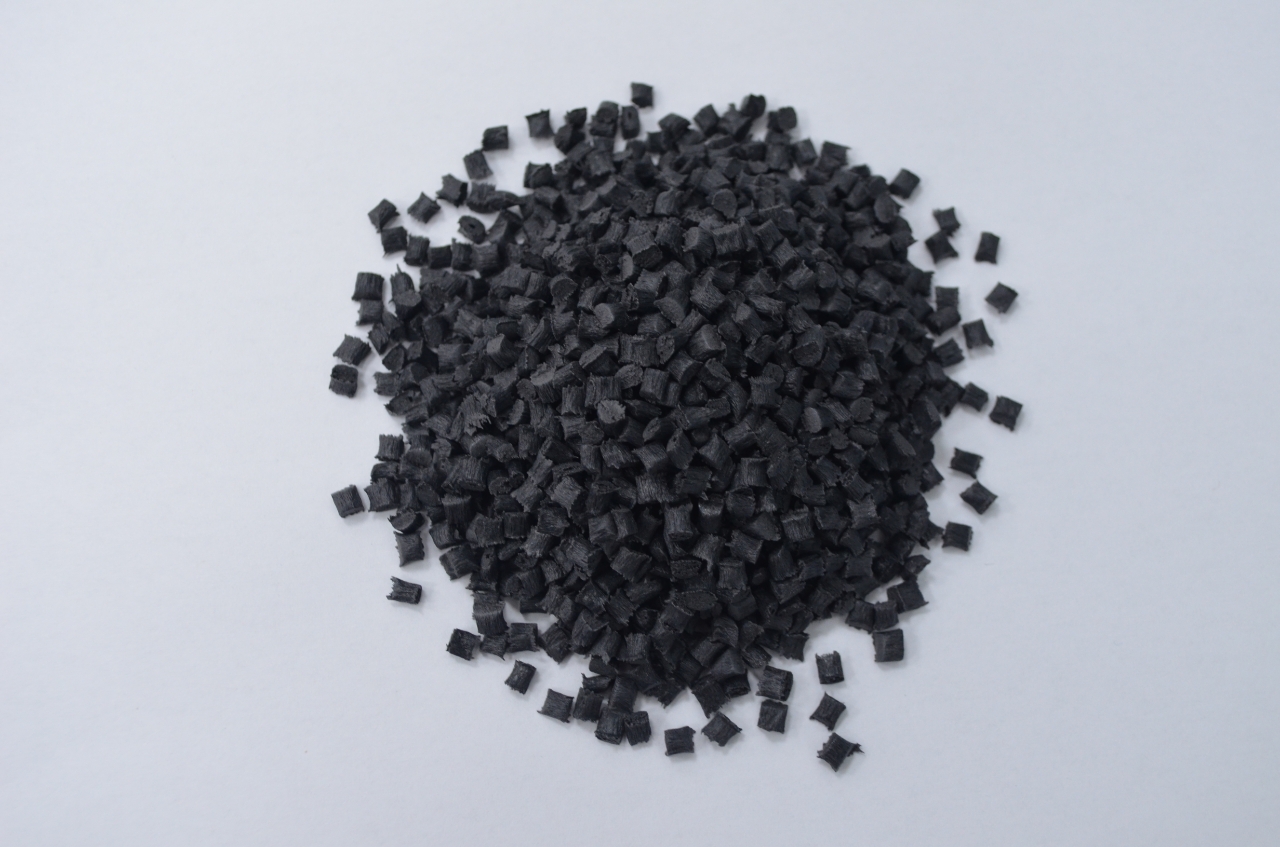
| Material Appearance & Shape | Black / Natural colloidal granular particles | Transparent or colored granules |
| Specific Gravity | 1.32 | 1.05 - 1.15 |
| Flash Point | >335℃ | <260℃ |
| Spontaneous Ignition Point | >420℃ | <340℃ |
| Minimum Order Quantity (MOQ) | 1T | Varies by distributor |
| Payment Terms | 30% T/T prepayment, 70% balance against B/L copy | Varies by supplier |
| Shipping Methods | Sea Freight (FCL/LCL) | Land / Air Freight |
Frequently Asked Questions (FAQ)
Why is specific gravity important when choosing high-temperature plastic pellet grades?
Specific gravity, such as 1.32 in modified engineering plastics, indicates the density of filler reinforcements (like glass fiber or mineral fillers) which directly correlates with the tensile strength and heat deflection temperature of the molded part.
What roles do flash and ignition points play in safety and processing?
A high flash point (>335℃) and spontaneous ignition point (>420℃) prevent material degradation, gas emissions, and fire hazards inside the injection molding barrel during high-temperature dwell times.
How do export certifications guarantee the quality of engineering plastics?
Certifications like IATF 16949:2016 and ISO 9001 ensure that the plastic pellet is manufactured under strict quality controls, minimizing viscosity shifts and impurity levels that cause structural defects.
Final Conclusion & Recommendations
Selecting the correct plastic pellet grade requires aligning the technical thermal specifications with certified manufacturing standards. Evaluating parameters such as a 1.32 specific gravity and thermal limits above 335°C ensures optimal molding efficiency and part durability. Working with global platforms that provide structured shipping methods like Sea Freight (FCL/LCL) and transparent payment terms such as 30% T/T prepayment and 70% balance against B/L copy secures reliable international delivery. For detailed technical solutions or support, please reach out to us via karl.liu@buyfromchina.cn or call 13825525819.
About Us
Established in 2012, Guangdong BFC Technology Co,.Ltd is an industrial internet platform and equipment exporting solution provider operating the "Buy Factory From China" (BFC) brand. With an export ratio of 100% and a primary market focus in South America, the company builds cross-border production capacity cooperation platforms. The professional trade team facilitates seamless communication and end-to-end export solutions for international buyers. The company's operations are backed by key industry standards, holding ISO 9001 and IATF 16949:2016 certifications for quality management and technical production.

Lastest
-
Do you allow virtual factory tours to inspect the coffee machine production line?
2026-08-03 -
What secure payment terms do you offer to minimize risk when importing plastic pellet ?
2026-08-03 -
What is the standard payment schedule for a high-value WOOD CUTTING MACHINE LINE order?
2026-08-03 -
Do you offer custom insulation colors and packaging options for bulk electrical wire orders?
2026-08-03 -
What is your claim process if we receive STAINLESS STEEL COILS with surface defects?
2026-08-03
SUBSCRIBE
INQUIRY