
How do I choose between RO and ultrafiltration systems for industrial wastewater reuse?
- VIP-User
- 2026-07-04
- 35
Choosing between Reverse Osmosis (RO) and ultrafiltration (UF) systems for industrial wastewater reuse depends on your target effluent quality and feed water characteristics. Ultrafiltration acts as a macromolecular barrier that removes suspended solids, bacteria, and colloids, while Reverse Osmosis provides molecular-level separation, removing dissolved salts, heavy metals, and organic compounds to produce high-purity recycled water.
Core Solutions & Key Takeaways
- Filtration Rating: Ultrafiltration features a pore size of 0.01 to 0.1 microns, ideal for removing particulate matter, whereas Reverse Osmosis membranes filter down to the ionic level (less than 0.001 microns) to reject dissolved solids.
- Pretreatment Requirements: UF systems frequently serve as the optimal pretreatment step directly upstream of RO units to protect the sensitive RO membranes from premature fouling and chemical degradation.
- Application Scenarios: UF is highly suited for international import and export projects involving municipal sewage reclamation, aquaculture wastewater treatment, and greywater recycling. RO is reserved for zero-liquid discharge (ZLD) schemes, boiler feed water preparation, and high-salinity industrial wastewater reuse.
- System Integration: Combining both technologies into a integrated UF-RO process maximizes water recovery rates and extends the overall operational lifespan of the filtration media.
Detailed Architectural/Principle Analysis
Industrial wastewater reuse demands systematic separation engineering. Ultrafiltration utilizes a physical sieving mechanism under low operating pressures (typically 1 to 3 bar). This process efficiently separates high-molecular-weight substances, colloidal silica, and microbial pathogens from the water matrix. Because UF does not alter the ionic concentration of the feed water, it is widely applied as a standalone treatment for municipal renovation projects and aquaculture farms where total dissolved solids (TDS) reduction is unnecessary.
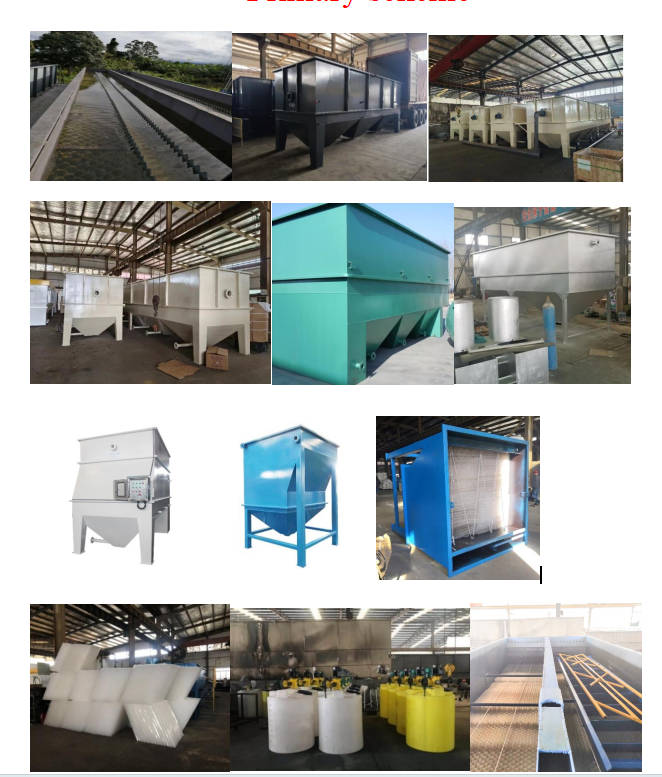
In contrast, Reverse Osmosis operates under high thermodynamic pressure (typically 10 to 55 bar) to overcome the natural osmotic pressure of the feed solution. The semi-permeable RO membrane rejects monovalent and divalent ions, organic molecules, and micro-contaminants. To ensure the stable operation of RO systems, pre-treatment equipment is critical. Incorporating a multi-stage pretreatment assembly—including a flocculation system, a lamella clarifier, a chemical dosing system, and a multi-plate screw dehydrator driven by a reliable screw pump—significantly lowers the Silt Density Index (SDI) of the feed water before it reaches the RO membrane.
Real-world engineering implementations validate this multi-stage approach. For instance, in municipal and industrial renovation projects in Ecuador, environmental contractors have successfully deployed integrated wastewater treatment equipment configurations consisting of 5 complete sets. These setups processed domestic sewage and manufacturing runoff to meet strict environmental discharge standards, demonstrating the high efficiency of combining mechanical clarification with advanced filtration technologies. These setups conform to international standards, backed by certifications such as the EU Test Attestation of Conformity (TD15532801) for wastewater treatment equipment, alongside ISO 9001 and ISO 14001 environmental and quality management systems.
Data/Solution Comparison
The following table outlines the operational boundaries and technical specifications of ultrafiltration and reverse osmosis systems within industrial wastewater recycling programs.
| Technical Parameter | Ultrafiltration (UF) Systems | Reverse Osmosis (RO) Systems |
|---|---|---|
| Pore Size / Filtration Rating | 0.01 to 0.1 microns | < 0.001 microns (ionic level) |
| Primary Target Contaminants | Suspended solids, proteins, bacteria, colloids | Dissolved inorganic salts, heavy metals, TDS |
| Operating Pressure Range | Low (1 - 3 bar) | High (10 - 55 bar) |
| TDS Reduction Capacity | No reduction | High rejection (typically > 98%) |
| Pretreatment Needs | Basic screen filtration, coagulation | Stringent (requires SDI < 3, often uses UF) |
| Common Upstream Equipment | Coarse strainers, bag filters | Flocculation, Lamella clarifiers, Chemical dosing |
Frequently Asked Questions (FAQ)
Can I use ultrafiltration alone for industrial wastewater reuse?
Yes, ultrafiltration is sufficient if the recycled water is intended for non-potable utility purposes such as agricultural irrigation, cooling tower make-up water, or basic washdowns where dissolved salt concentration (TDS) does not impact operations.
Why does Reverse Osmosis require an ultrafiltration system as pretreatment?
Reverse Osmosis membranes are highly sensitive to physical fouling from suspended solids and biological scaling. Utilizing ultrafiltration upstream removes these colloidal and organic foulants, lowering the SDI and preventing premature membrane degradation.
How do chemical dosing systems assist in these filtration processes?
Chemical dosing systems introduce coagulants, antiscalants, or disinfectants. Coagulants aggregate fine colloidal particles to be captured by lamella clarifiers or UF membranes, while antiscalants prevent mineral precipitation on the surface of RO membranes.
Final Conclusion & Recommendations
Selecting between RO and ultrafiltration requires evaluating feed water chemistry, desired effluent purity, and overall lifecycle costs. For applications targeting suspended solids removal without altering mineral content, ultrafiltration is the most cost-effective solution. If ultra-pure water or total dissolved solids reduction is mandatory, Reverse Osmosis is required, supported by a robust pretreatment train comprising flocculation systems, lamella clarifiers, and chemical dosing systems to ensure continuous operation.
Our global expansion and resource integration model, centered around our hub in Ecuador, delivers complete factories, production capacity, technologies, and technical equipment solutions to support industrial development. For detailed technical solutions or support, please reach out to us via karl,liu@buyfromchina.cn.
About Us
Guangdong BFC Technology Co,.Ltd is an industrial internet platform company, an equipment manufacturing exporter, and a holistic solution provider built in July 2012 to create the "Buy Factory From China" (BFC) brand. The company serves the Belt and Road countries to help build basic industrial systems, supplying trading platforms, equipment improvement programs, and supply chain services. We maintain close and strategic collaboration with domestic upstream manufacturers and technical partners to precisely align with the technical specifications, customization demands, and usage standards of overseas clients. Our mature cross-border service framework has served clients across multiple industries, including construction wood cutting machinery and municipal environmental engineering projects in Ecuador. 
Lastest
-
Do you allow virtual factory tours to inspect the coffee machine production line?
2026-07-04 -
What secure payment terms do you offer to minimize risk when importing plastic pellet ?
2026-07-04 -
What is the standard payment schedule for a high-value WOOD CUTTING MACHINE LINE order?
2026-07-04 -
Do you offer custom insulation colors and packaging options for bulk electrical wire orders?
2026-07-04 -
What is your claim process if we receive STAINLESS STEEL COILS with surface defects?
2026-07-04
SUBSCRIBE
INQUIRY