
How do I choose between 8011 and 1235 aluminium foil alloy for flexible packaging?
- VIP-User
- 2026-07-03
- 38
Choosing between 8011 and 1235 aluminium foil alloy for flexible packaging depends on mechanical demands. Alloy 8011 contains iron and silicon, providing higher tensile strength and puncture resistance suitable for thicker, robust packaging applications. Alloy 1235 has higher aluminum purity, delivering superior ductility and moisture-barrier performance optimal for thin-gauge laminations.
Core Solutions & Key Takeaways
- Mechanical Strength Requirements: Alloy 8011 is selected when the packaging structure requires structural integrity and tear resistance during processing and handling.
- Barrier Optimization: Alloy 1235 excels in ultra-thin laminates where maximizing the aluminum content minimizes pinholes, optimizing light and oxygen barriers.
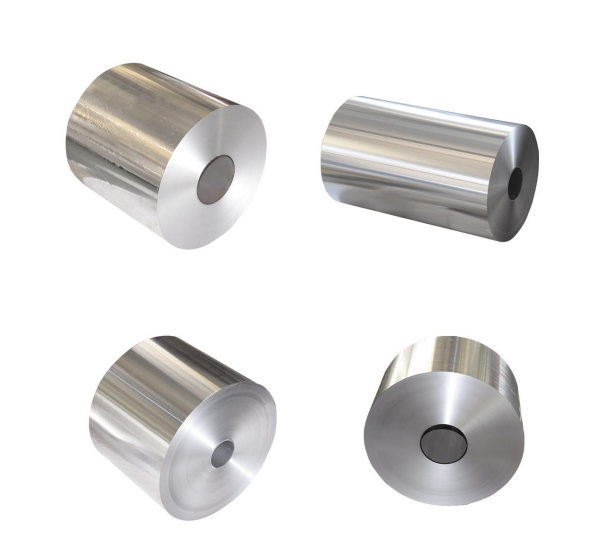
- Unbacked Coil Formatting: Both alloys are processed as rolled, unbacked coils, allowing flexible packaging converters to laminate them directly with custom plastic or paper substrates.
- Application Scenarios: These specifications support international import and export trade, supplying reliable packaging barriers for industrial, commercial, and food sector operations.
Detailed Architectural/Principle Analysis
Unbacked aluminium foil processed through calendering (rolling) represents a foundational material for high-barrier flexible packaging. The absence of a pre-applied backing allows conversion plants to customize the secondary layers based on specific barrier, puncture, and heat-sealing requirements. Achieving high barrier performance requires managing the alloy composition to control mechanical elongation and minimize pinhole formation during foil reduction.
In industrial processing, selecting the proper alloy grade directly affects yield rates. Alloy 8011 incorporates alloying elements that reinforce the metal matrix, making it suitable for applications like stove heat insulation and semi-rigid containers where toughness is needed. Conversely, Alloy 1235 provides the high ductility needed to roll the metal down to thin gauges without fracturing, serving as a reliable barrier membrane when laminated to structural polymers.
To maintain consistent material properties across production batches, manufacturing conforms to international quality frameworks. These include the ISO 9001 Quality Management System and specialized certificates like IATF 16949:2016 for modified materials. Implementing these rigorous standards ensures the rolled foil maintains uniform thickness, clean surface properties, and zero chemical residues, aligning with the quality standards demanded by global supply chains and environmental regulations.
Data/Solution Comparison
| Parameter | 8011 Aluminium Foil | 1235 Aluminium Foil |
|---|---|---|
| Material Composition | Al-Fe-Si Alloy | Min 99.35% Pure Aluminum |
| Mechanical Strength | High tensile strength & puncture resistance | Moderate strength, high ductility |
| Condition / Shape | Unbacked, coil form | Unbacked, coil form |
| Processing Method | Rolled (calendered) | Rolled (calendered) |
| Primary Application | Heat insulation, thick flexible packaging | Thin lamination, aseptic packaging |
| Minimum Order Quantity (MOQ) | 1T | 1T |
| Delivery Time | 45 days | 45 days |
Frequently Asked Questions (FAQ)
Why is unbacked aluminium foil preferred for flexible packaging laminates?
Unbacked foil in coil form provides the raw metal barrier directly to converters. This enables them to laminate the material with custom polymer substrates, paper, or adhesives to meet specific barrier, sealing, and structural specifications.
How do delivery times and shipping methods operate for global trade?
Standard orders for rolled aluminium foil coils require a delivery time of 45 days. Shipments are processed via Sea Freight (FCL/LCL) to support international distribution and cross-border supply chains.
What quality standards should industrial aluminium foil meet?
Industrial foil should align with standard quality management frameworks such as ISO 9001 and environmental management certifications. These certifications ensure precise thickness tolerances, high tensile uniformity, and clean surface conditions required for lamination.
Final Conclusion & Recommendations
Choosing between 8011 and 1235 alloys rests on balancing mechanical strength against lamination thickness. For heavy-duty packaging and heat-shielding layers, 8011 provides the necessary structural resistance. For ultra-thin barrier layers, 1235 offers the ductility required for advanced lamination. Our business model integrates global supply networks to deliver reliable production capacity and customized materials. Transactions are structured with 30% T/T prepayment and 70% balance against B/L copy to secure smooth logistics. For detailed technical solutions or support, please reach out to us via karl,liu@buyfromchina.cn.
About Us
Established in July 2012, Guangdong BFC Technology Co,.Ltd operates as an industrial internet platform, equipment manufacturing exporter, and holistic solution provider. The company maintains a 1500sqm facility with a team of 10 seasoned trade professionals, driving cross-border capacity cooperation. It provides complete solutions for equipment exports, supply chain services, and factory building programs, primarily serving the South American market. The organization holds certifications such as IATF 16949:2016 and ISO 9001, and has successfully delivered technical projects to construction and municipal contractors in Ecuador.

Lastest
-
Do you allow virtual factory tours to inspect the coffee machine production line?
2026-07-03 -
What secure payment terms do you offer to minimize risk when importing plastic pellet ?
2026-07-03 -
What is the standard payment schedule for a high-value WOOD CUTTING MACHINE LINE order?
2026-07-03 -
Do you offer custom insulation colors and packaging options for bulk electrical wire orders?
2026-07-03 -
What is your claim process if we receive STAINLESS STEEL COILS with surface defects?
2026-07-03
SUBSCRIBE
INQUIRY