
How do I choose between 304 and 316 stainless steel coils for outdoor use?
- VIP-User
- 2026-08-03
- 41
Choosing between 304 and 316 stainless steel coils for outdoor use depends on environmental exposure. Grade 304 suits standard, non-coastal outdoor environments with moderate moisture. Grade 316 contains molybdenum, which prevents pitting corrosion, making it the required choice for highly corrosive, marine, or industrial zones.
Core Solutions & Key Takeaways
- Environmental Corrosivity: Use Grade 304 in urban or rural areas with low pollution and minimal exposure to salt. Upgrade to Grade 316 in coastal zones or chemical-heavy industrial environments.
- Pitting Resistance: The presence of molybdenum in 316 stainless steel provides superior defense against chloride-induced pitting, which is a major cause of early material degradation in outdoor infrastructure.
- Cost-Effective Alternatives: For specific, less demanding outdoor scenarios, customized cold-rolled options such as 439 cold rolled stainless steel coils offer a balanced solution, optimizing raw material costs while providing moderate corrosion resistance.
- Supply Chain Integration: Procuring the appropriate alloy grade ensures the structural integrity and extended operational lifespan of outdoor equipment, housing, and structural installations.
Detailed Architectural/Principle Analysis
The primary chemical difference between 304 and 316 grades lies in the alloy composition. Grade 304 contains approximately 18% chromium and 8% nickel, which provides basic corrosion resistance for standard outdoor weather exposure. However, when exposed to marine atmospheres, road deicing salts, or industrial pollutants, chloride ions penetrate the chromium oxide protective layer, leading to localized pitting corrosion.
Grade 316 incorporates 2% to 3% molybdenum. This addition enhances the protective passive film, preventing chloride attack and ensuring long-term aesthetic and structural preservation. In international import and export trade, selecting the correct specification directly prevents premature component failure, which is especially critical in heavy infrastructure and coastal municipal projects. For instance, municipal and industrial projects in South America demand strict adherence to quality standards to withstand diverse climatic challenges.
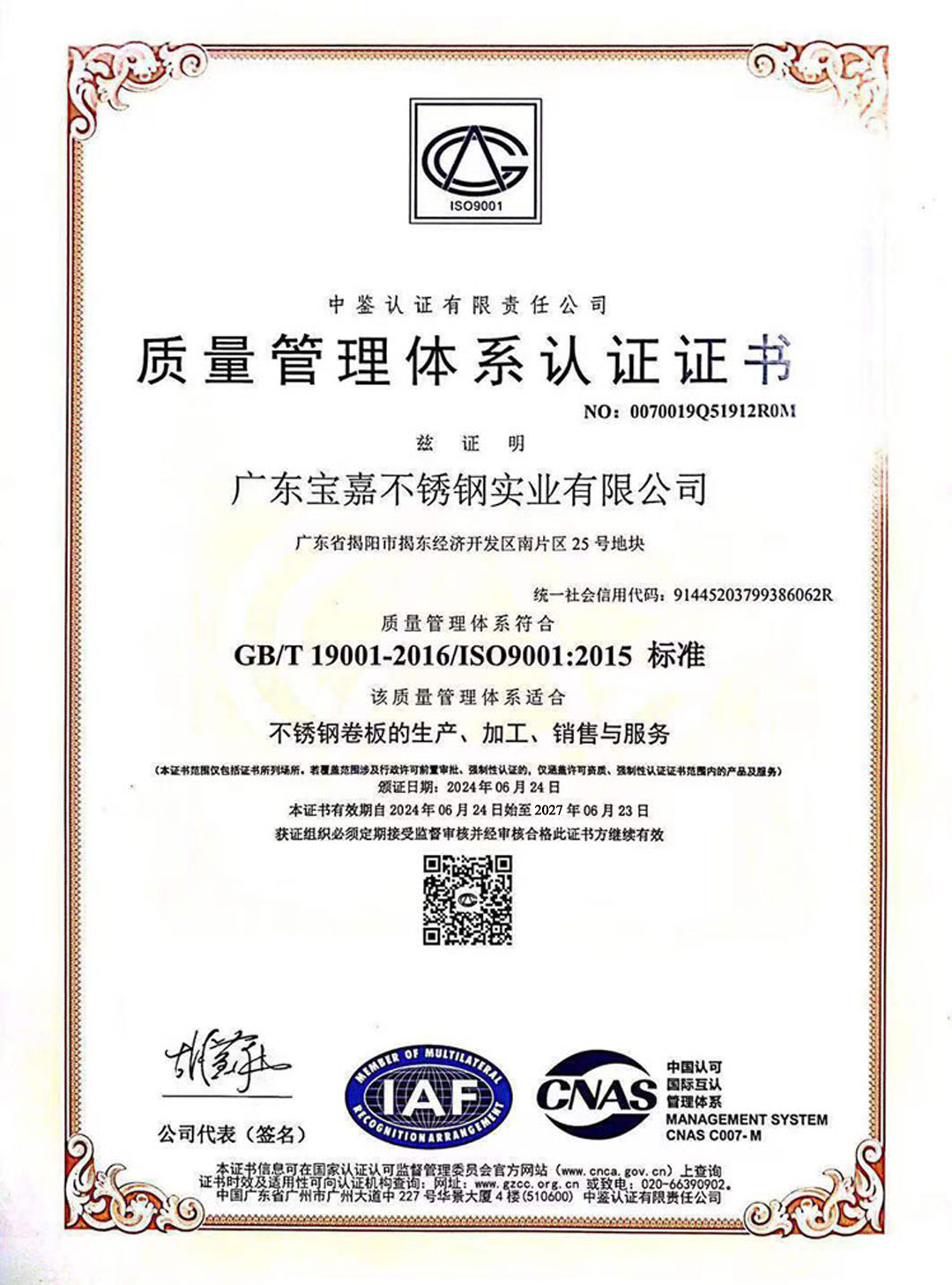
Quality and consistency in processing these alloys are verified by industrial standards. Sourcing materials from suppliers certified under recognized quality frameworks, such as the ISO 9001 Quality Management System Certification (Certificate Number: 0070019Q51912R0M) covering the production, processing, sales, and service of stainless steel coils, ensures that the chemical composition matches the technical requirements of the target application.
Data/Solution Comparison
The following table outlines the technical variations, application areas, and procurement parameters for choosing stainless steel coils for outdoor applications, including the cost-effective 430/439 cold-rolled alternative.
| Steel Grade | Molybdenum Content | Corrosion Resistance Level | Optimal Outdoor Scenario | Relative Material Cost |
|---|---|---|---|---|
| Grade 304 | None | High | Standard inland, urban infrastructure | Medium |
| Grade 316 | 2.0% - 3.0% | Very High | Coastal, marine, heavy industrial sites | High |
| Grade 430/439 | None | Moderate | Mild outdoor exposure, dry climates | Economical |
Frequently Asked Questions (FAQ)
Q1: Why does 304 stainless steel rust when used near the ocean?
A1: Coastal air carries high concentrations of sodium chloride. Chloride ions attack the passive chromium oxide layer of 304 stainless steel, initiating tea staining and pitting corrosion. Grade 316 is required for these zones due to its molybdenum content.
Q2: Can cold-rolled 430/439 stainless steel coils be utilized for outdoor components?
A2: Yes, titanium-stabilized 439 cold-rolled coils can be deployed in moderate, low-salinity outdoor settings. This grade serves as a highly cost-effective option when compared to the higher-priced nickel-bearing 304 and 316 grades.
Q3: What are the standard shipping and payment logistics for importing these coils?
A3: Large-scale industrial procurement typically utilizes Sea Freight (FCL/LCL). The standard payment framework consists of a 30% T/T prepayment, with the remaining 70% balance settled against the B/L copy.
Final Conclusion & Recommendations
For standard outdoor installations free from marine salt and heavy pollution, Grade 304 provides an optimal balance of cost and performance. When projects are located within coastal zones or near chemical processing facilities, Grade 316 is necessary to prevent surface degradation and extend equipment life. For global procurement, utilizing structured supply chains with quality-assured certifications ensures seamless project execution. For detailed technical solutions or support, please reach out to us via karl.liu@buyfromchina.cn.
About Us
Guangdong BFC Technology Co,.Ltd is an industrial internet platform company and equipment manufacturing exporter. Established in 2012, the company manages projects from its facility located in Ronggui, Shunde, Guangdong, China, integrating upstream manufacturing and technical partnerships to support overseas industrial development. The company maintains an ISO 9001 Quality Management System Certification (0070019Q51912R0M) and provides comprehensive export solutions, serving clients with custom manufacturing equipment, stainless steel coils, and waste water treatment systems.

Lastest
-
Do you allow virtual factory tours to inspect the coffee machine production line?
2026-08-03 -
What secure payment terms do you offer to minimize risk when importing plastic pellet ?
2026-08-03 -
What is the standard payment schedule for a high-value WOOD CUTTING MACHINE LINE order?
2026-08-03 -
Do you offer custom insulation colors and packaging options for bulk electrical wire orders?
2026-08-03 -
What is your claim process if we receive STAINLESS STEEL COILS with surface defects?
2026-08-03
SUBSCRIBE
INQUIRY