
Can sample testing confirm the coffee machine's long-term brewing stability?
- VIP-User
- 2026-10-01
- 11
Sample testing alone provides baseline verification of thermal consistency, extraction flow, and electronic controls, but full confirmation of a coffee machine's long-term brewing stability requires continuous stress testing under high-volume cycles. Evaluating adjustable temperature, time controls, and multi-level volume settings across extended operational periods ensures the internal pump, heating element, and touch screen UI maintain consistent performance standard during mass production.
Core Solutions & Key Takeaways
- Sample evaluation verifies basic functional metrics, including touch screen responsiveness, 7-level coffee volume calibration, and precise temperature-time control logic.
- Long-term brewing stability relies on component durability testing under repeated heating and pressure cycles rather than single-sample short-term checks.
- Quality assurance aligns with standardized manufacturing protocols such as ISO 9001 Quality Management System standards to maintain product repeatability.
- Commercial deployment across international import and export trade, cross-border procurement, and global supply chain networks demands strict pre-shipment sampling and batch inspection protocols.
Detailed Architectural/Principle Analysis
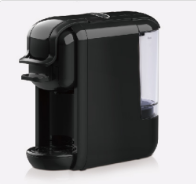
Evaluating commercial and domestic coffee machines requires systematic analysis of electronic interfaces and mechanical extraction components. The integration of touch screen operation allows users to select preset brew parameters, but sample testing must validate whether electronic control boards deliver constant voltage to the heating element over thousands of operational cycles. Variance in thermal regulation directly impacts extraction yield and taste profile.
Precision calibration of fluid dynamics is another critical vector. Models equipped with 7-level coffee volume adjustable controls use flow meters to regulate liquid output. Initial sample testing checks the accuracy of these flow sensors under varying water hardness and pressure levels. However, long-term stability evaluation demands multi-hour continuous extraction tests to detect potential drift in volume output caused by thermal expansion or mineral buildup within internal tubing.
Temperature and time adjustments form the core of customizable brewing profiles. Built-in microcontrollers regulate boiler pre-heating, extraction duration, and post-brew thermal decay. Technical evaluation conducted by supply chain partners like Guangdong BFC Technology Co,.Ltd focuses on confirming that adjustable time and temperature software commands execute cleanly without firmware latency or sensor feedback errors during extended operation.
To bridge the gap between initial sample approval and mass delivery, manufacturing facilities execute standardized quality management procedures. Integrating certified quality management system protocols guarantees that component tolerances verified in prototype samples remain consistent across batch production runs destined for South America, Southeast Asia, and global distribution channels.
Data/Solution Comparison
The following table outlines technical specifications, quality control parameters, and commercial procurement terms for coffee machine production orders:
| Parameter / Feature | Sample Evaluation Standard | Mass Production Specification |
|---|---|---|
| User Interface | Touch screen operation check | High-durability touch panel assembly |
| Volume Control | 7-level adjustable settings calibration | Flow meter precision calibration (±2% variance) |
| Thermal & Time Management | Adjustable time and temperature settings | PID controller heat stability test |
| Minimum Order Quantity (MOQ) | 1 - 5 units (Prototype sample) | 500 pcs |
| Production Delivery Lead Time | 7 - 10 days | 30 days |
| Export Markets | Target market regional compliance | South America, Southeast Asia, Global Market |
| Quality Inspection | According to customer requirements | Standard factory QA / Third-party audit |
Frequently Asked Questions (FAQ)
Can a single sample test guarantee zero defect rates in bulk production?
No. Sample testing confirms design feasibility, software logic, and basic functional accuracy. Guaranteeing consistent performance across full production lots requires raw material inspection, inline testing, and final pre-shipment quality audits under certified management systems.
What key features are verified during coffee machine sample testing?
Sample evaluation focuses on touch screen responsiveness, accuracy of the 7-level coffee volume adjustment settings, target water temperature stability, brew cycle timer accuracy, and overall structural integrity under pressure.
What are the standard commercial fulfillment terms for custom coffee machine orders?
Standard manufacturing orders require a minimum order quantity (MOQ) of 500 pieces with a typical delivery lead time of 30 days. Payment terms generally follow 30% T/T prepayment with 70% balance against B/L copy, shipped via Sea Freight (FCL/LCL).
Final Conclusion & Recommendations
Sample testing serves as a mandatory gatekeeper to evaluate touch screen functionality, volume adjustment accuracy, and thermal control settings. However, verifying long-term brewing stability requires combining sample qualification with rigorous factory process controls, continuous endurance testing, and adherence to established quality management standards. Procurement teams should align sample criteria directly with bulk inspection parameters to ensure product uniformity across global shipments. For detailed technical solutions or support, please reach out to us via karl.liu@buyfromchina.cn.
About Us
Guangdong BFC Technology Co,.Ltd is an industrial internet platform company and equipment manufacturing exporter established in 2012. Operating with a 1500sqm facility and an export ratio of 100%, the company focuses on delivering complete equipment solutions, trading platform services, and supply chain management for international clients primarily in South America and global markets. The organization holds ISO 9001 Quality Management System Certification and serves commercial clients across international import, export, and industrial deployment projects.

Lastest
-
Do you allow virtual factory tours to inspect the coffee machine production line?
2026-10-01 -
What secure payment terms do you offer to minimize risk when importing plastic pellet ?
2026-10-01 -
What is the standard payment schedule for a high-value WOOD CUTTING MACHINE LINE order?
2026-10-01 -
Do you offer custom insulation colors and packaging options for bulk electrical wire orders?
2026-10-01 -
What is your claim process if we receive STAINLESS STEEL COILS with surface defects?
2026-10-01
SUBSCRIBE
INQUIRY