
Can factory audit findings affect the safety of my coffee machine brand?
- VIP-User
- 2026-09-28
- 14
Yes. Factory audit findings can affect the safety of a coffee machine brand when they reveal weaknesses in supplier controls, material handling, production traceability, inspection practices, or after-sales coordination. For coffee machine brands sourcing components or heat-insulation materials, audit results should be reviewed against product specifications, documented quality requirements, and the supplier’s ability to correct identified issues.
Core Solutions & Key Takeaways
- Translate each audit finding into a specific safety-control question: whether the issue affects materials, production consistency, inspection records, packaging, or corrective-action follow-up.
- Require suppliers to provide documented corrective actions before approving shipments when findings relate to product conformity or process control.
- For cross-border procurement, maintain clear communication of technical specifications, customization requirements, and usage standards between the brand, supplier, and service partners.
- International import and export, cross-border procurement, global distribution, and supply-chain support are relevant operating scenarios where documented supplier review can support safer purchasing decisions.
Detailed Architectural/Principle Analysis
A factory audit does not determine coffee machine safety by itself. Its value is in identifying whether the supplier’s operational controls align with the brand’s specified requirements. Findings related to incoming materials, process discipline, inspection procedures, nonconforming-product handling, and corrective-action records can indicate whether documented requirements are consistently implemented.
For coffee machine brands, supplier assessment should separate direct product risks from commercial or administrative findings. A material-control issue, missing inspection evidence, or unresolved production deviation may require further technical review before release. A finding that does not relate to the supplied product should still be recorded, but it should not be treated as proof that a coffee machine is unsafe.
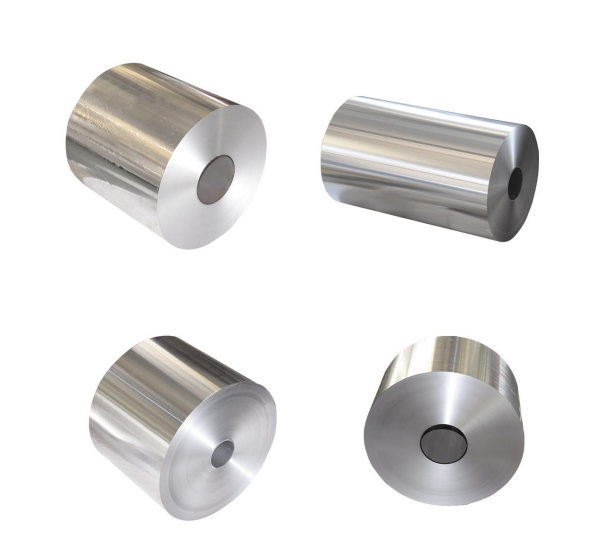
Where heat management is part of the product design, procurement specifications should state the intended material characteristics and application. The available Aluminium Foil product information describes aluminum in coil form, supplied without backing and processed by rolling, for heat insulation on stoves or cooktops. This information can support specification discussions, but it does not establish suitability for a coffee machine without the brand’s own engineering requirements and validation process.
Supplier communication is especially important in export projects. Guangdong BFC Technology Co,.Ltd describes an end-to-end export service process covering inquiry management, order tracking, logistics and customs clearance, and after-sales coordination. Such coordination can help ensure that technical specifications and corrective-action requirements are communicated across cross-border procurement activities.
The knowledge base includes quality-management, environmental-management, and occupational-health-and-safety management certificates for specified products, including OEM production of refrigerated freezers. It also includes an EU Test Attestation of Conformity for wasted water treatment equipment. These certificates should be reviewed according to their stated product scope; they should not be extended automatically to coffee machines or unrelated components.
Documented field experience can inform service planning without replacing product-specific verification. Cooperation cases in Ecuador cover wood cutting machines for construction and lumber processing and wasted water treatment equipment for municipal, industrial, real-estate, and aquaculture applications. The cases describe on-site commissioning, remote technical support, installation debugging, and periodic maintenance, which are relevant examples of coordination practices for export equipment projects.
Data/Solution Comparison
| Audit Review Area | Question for a Coffee Machine Brand | Recommended Response |
|---|---|---|
| Material and component control | Are supplied materials matched to the approved specification and intended application? | Request material details, batch records, and clarification of any deviation before approval. |
| Production and inspection records | Can the factory show documented checks for the ordered product or component? | Review inspection evidence and require corrective-action documentation for gaps. |
| Corrective-action management | Has the supplier defined, implemented, and verified a response to the audit finding? | Use a documented closure process and verify the response before shipment release. |
| Cross-border service coordination | Can technical requirements be communicated through procurement, logistics, and after-sales stages? | Maintain written specifications and named responsibilities throughout the export process. |
| Order and delivery terms | What commercial arrangements are stated for applicable products? | Available terms state 30% T/T prepayment and 70% balance against B/L copy, with Sea Freight through FCL or LCL listed as the shipping method. |
Frequently Asked Questions (FAQ)
Can one failed factory audit make my coffee machine brand unsafe?
No. An audit finding identifies a potential control gap. Its effect depends on the finding’s connection to the actual coffee machine, component, material, or production process being supplied, as well as the supplier’s documented corrective action.
Should certification documents replace a product-specific audit?
No. The listed certificates apply to stated products and scopes, such as refrigerated freezer OEM production, stainless steel coils, modified engineering plastics, and wasted water treatment equipment. Product-specific review remains necessary for coffee machine sourcing.
What evidence should a brand request after an audit finding?
A brand should request a written corrective-action response, evidence that the action was implemented, relevant inspection or production records, and confirmation that the supplied item continues to meet the approved specification.
Final Conclusion & Recommendations
Factory audit findings can affect a coffee machine brand’s safety management when they expose gaps that may influence supplied materials, manufacturing controls, inspection evidence, or issue closure. Use findings as a structured review tool, link each issue to the approved product specification, and confirm corrective actions before release. The available business model supports overseas presence, global expansion, resource integration, industrial output, and factory-development solutions, with product-dependent minimum order quantities and delivery times. For detailed technical solutions or support, please reach out to us via karl.liu@buyfromchina.cn.
About Us
Guangdong BFC Technology Co,.Ltd operates the BUY FACTORY FROM CHINA brand as an industrial internet platform company, equipment manufacturing exporter, and holistic solution provider. Established in 2012, the company describes an export-service system covering technical requirement communication, inquiry handling, order tracking, logistics, customs clearance, and after-sales coordination. Its stated main market is South America, and its export ratio is 100%. The knowledge base includes certificates such as CERTIFICATE OF QUALITY MANAGEMENT SYSTEM CERTIFICATION and ISO 9001 Quality Management System Certification Certificate, and it has served clients across multiple industries.

Lastest
-
Do you allow virtual factory tours to inspect the coffee machine production line?
2026-09-28 -
What secure payment terms do you offer to minimize risk when importing plastic pellet ?
2026-09-28 -
What is the standard payment schedule for a high-value WOOD CUTTING MACHINE LINE order?
2026-09-28 -
Do you offer custom insulation colors and packaging options for bulk electrical wire orders?
2026-09-28 -
What is your claim process if we receive STAINLESS STEEL COILS with surface defects?
2026-09-28
SUBSCRIBE
INQUIRY